
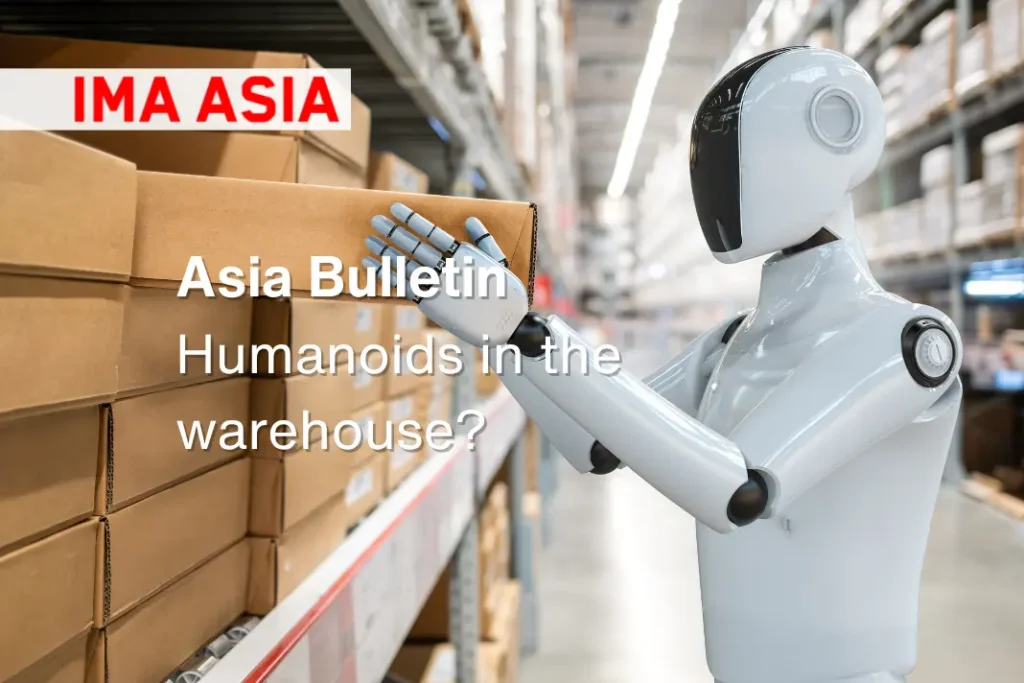
Humanoids in the warehouse?
Humanoids in the warehouse? August 12, 2026 What’s new: Advances in robotic hands, machine vision, and AI are bringing humanoid robots closer to performing tasks that previously required human dexterity — and Asia CEOs are taking notice. There have been significant breakthroughs in robotics, particularly with robotic hands being paired with AI. I think there needs to be more discussion about how this will shape the way we do business and eventually completely change how we live as a species in the world. These robots can hang paintings on a wall and will be able to repair anything in your house, do all the work in our warehouses and factories, and even in healthcare. Why it matters: Humanoids could change the economics of automation by allowing firms to orchestrate tasks without redesigning facilities around machines. This raises immediate questions about investment timing, workforce planning, and where the technology will first become commercially viable. It’s quite the change in the economy and ways of working that will have geopolitical ramifications as well. I see all the buildup of AI capability, plus the new robotics element out there. It’s all coming together really fast – the transformation could happen in three to five years. Are we ready for a world where governments hand out money to people who then buy goods made entirely by efficient machines? (Global logistics firm) State of play: Many industrial firms have heavily automated their operations by continually investing in the latest technologies as they became available and as costs fell—but have not yet added robots. We have eight on-site labs and factories in Southeast Asia, and they are very automated, but do not use robots per se. It’s more that we use AI to optimise formulations for our chemicals. (Global industrial solutions provider) The other side: Firms that use robots extensively are commonly found in manufacturing and logistics. We use robotics a lot. It started with a massive investment in automated storage and retrieval systems (ASRS) that are locked on tracks inside the warehouse. Not long ago, we started using autonomous mobile robots (AMRs) that are modular and far less expensive. But what we could never replace were the human pickers with manual dexterity to move the boxes by hand. So far, the persistent constraint has been work requiring human hands with sensitive pressure control. This means humanoids represent more than just another incremental upgrade to existing automation and cost savings — but potentially a dramatic replacement for human handlers. The pain point: Asia CEOs regularly say that finding, training, and retaining the right talent is an impediment to operations, particularly when growth accelerates. Robots could make that constraint less acute. You ask what my biggest problem is. It is a very good one to have because we are growing rapidly. Right now, we need to ensure we have the right talent to implement these projects, and that talent is hard to find. Maybe, in three years, my problem will be what to do with our employees when I have robots waiting to execute the job. The upshot: Once humanoid robots replicate human dexterity and become affordable, their adoption could be wide-ranging. Their predictability, availability, and potential to lower operating costs will be the draw. Once there is mass production of robots with human-like dexterity, I think it is going to be inevitable. Robots work 24 hours a day, never go on strike, never get sick. You know how much you’re going to pay. I expect that these new robots will quickly go into logistics and manufacturing industries, then service industries, and then be used for domestic activities. What’s next: Two developments deserve attention. First, as China establishes an early lead in humanoid robots, the US is moving to restrict their market access. The FCC has blocked the authorisation, import, or sale of new foreign-produced advanced robots unless they receive conditional approval on national-security grounds. Second, innovation rarely travels in a straight line. The most consequential applications may not be the ones businesses are currently planning for. One expert at an IMA event in China offered a provocative thought experiment: A Chinese robotics professor said he was stunned by how far robots had advanced in just a few years. His take was that autonomous driving might eventually be unnecessary: a household robot could vacuum, feed the dog, then climb into an old petrol-powered car and drive its owner to the supermarket. China already leads in the production and deployment of humanoid robots. It will be interesting to see how this plays out. Deepen your understanding & explore the implications for business and strategy in our latest Asia Brief. Log In to access our latest reports. LOG IN Interested in joining the discussions?Contact us to learn more. You might also find these insights valuable Asean Asia Bulletins Asia Pacific China China Bulletins Exchange Rates Forecast Geopolitics Japan Leadership Market Strategy Team-Building Humanoids in the warehouse? August 12, 2026/ Humanoids in the warehouse? September 16, 2026 What’s new: Advances in robotic hands, machine vision, and AI are bringing humanoid… Read More Inflation in Asia: managing costs in both directions July 28, 2026/ Inflation in Asia: managing costs in both directions July 28, 2026 What’s new: The spectre of inflation is hardly new…. Read More How to build AI capability locally, before it’s too late July 10, 2026/ How to build AI capability locally, before it’s too late July 10, 2026 What’s new: In a recent Asia CEO… Read More Load More End of Content.